
I recently shared the thought literacy framework. Someone commented that working with your thoughts, like observing and understanding how certain things influence them, is PhD-level knowledge.
Point blank: this upset me.
While I understand the sentiment, and used to think that way myself, the idea that you need a PhD to talk about and work with your thoughts isn’t true.
I’d actually call it a limiting belief, one that reflects a lack of access to education about thoughts, not a lack of ability to understand them. That gap is part of the reason why I created thought literacy.

How We Got Here
Thoughts are commonly treated as something that’s primarily discussed in a therapy room. However, people have been thinking about their thoughts, questioning their interpretations, and discussing how their thinking affects their lives for thousands of years.
A well known example is Marcus Aurelius, whose writings included reflections on perceptions, judgments, reactions, and how a person chooses to respond to what happens. He wasn’t a psychologist. Psychology wouldn’t become a formal scientific discipline for nearly 1,700 years.
With the birth of psychology thoughts were studied more systematically. Researchers built a large body of knowledge about thoughts and how they influence what we feel and do. Cognitive therapies developed approaches that focused on the relationship between thoughts, emotions, and behaviors.
We hear snippets of advice and knowledge of thoughts in books and inspirational quotes. Yet there isn’t a widely accessible, curated resource that teaches the average person about their thoughts and how to work with them. As a result, thoughts become a topic associated with therapy and not something the average person needed to (or could) learn.
The Separation Between Diagnosis and Everyday Life
Most people start working with their thoughts after they experience significant distress and seek professional help. A therapist teaches them how to identify thoughts, examine their interpretations, and respond differently.
But just like you don’t need a medical degree to learn basic information about your body, you don’t need a PhD to understand your own thoughts, recognize an unhelpful interpretation, or learn skills for responding differently.
Which is why we need a clearer separation between therapeutic services and fundamental skill building, including skills someone can use before reaching a point of crisis.
There will always be a need for professional mental health care, including diagnosis and treatment when someone needs it. The point is that learning basic skills for understanding and working with thoughts shouldn’t require someone to first become distressed enough to need therapy.
My Pledge to You
Learning about thoughts has been one of the greatest joys of my life, only surpassed by teaching about them.
Since most people are coming into learning about thoughts with little to no formal knowledge, and may already assume the subject is difficult to understand, I try to make this information as accessible as possible.
I write at an eighth-grade reading level, not because I don’t trust that you’re smart enough to understand, but because I know what it’s like to learn something new with a lot of moving parts. I also value accessibility, and writing at this level challenges me to strengthen my own understanding of these concepts
So please do me a solid and at least consider that you don’t need a PhD or a formal degree to understand your thoughts.
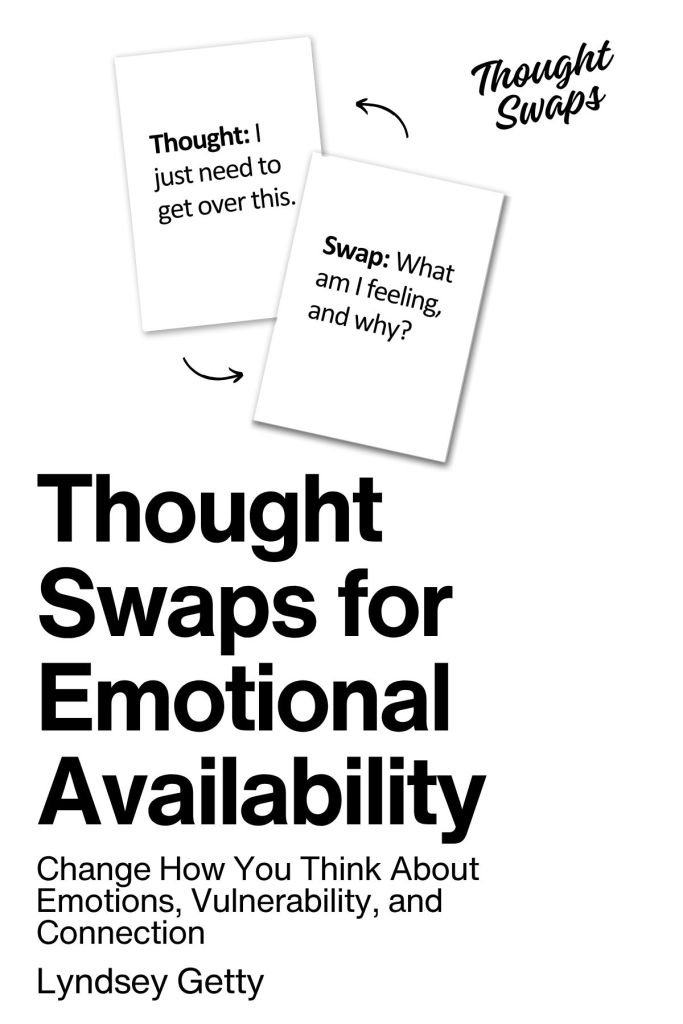
Let’s do your first thought swap together:
Thought: You need a PhD to talk about and understand thoughts.
Swap: Understanding my thoughts is a skill I can learn.







Thoughts?